

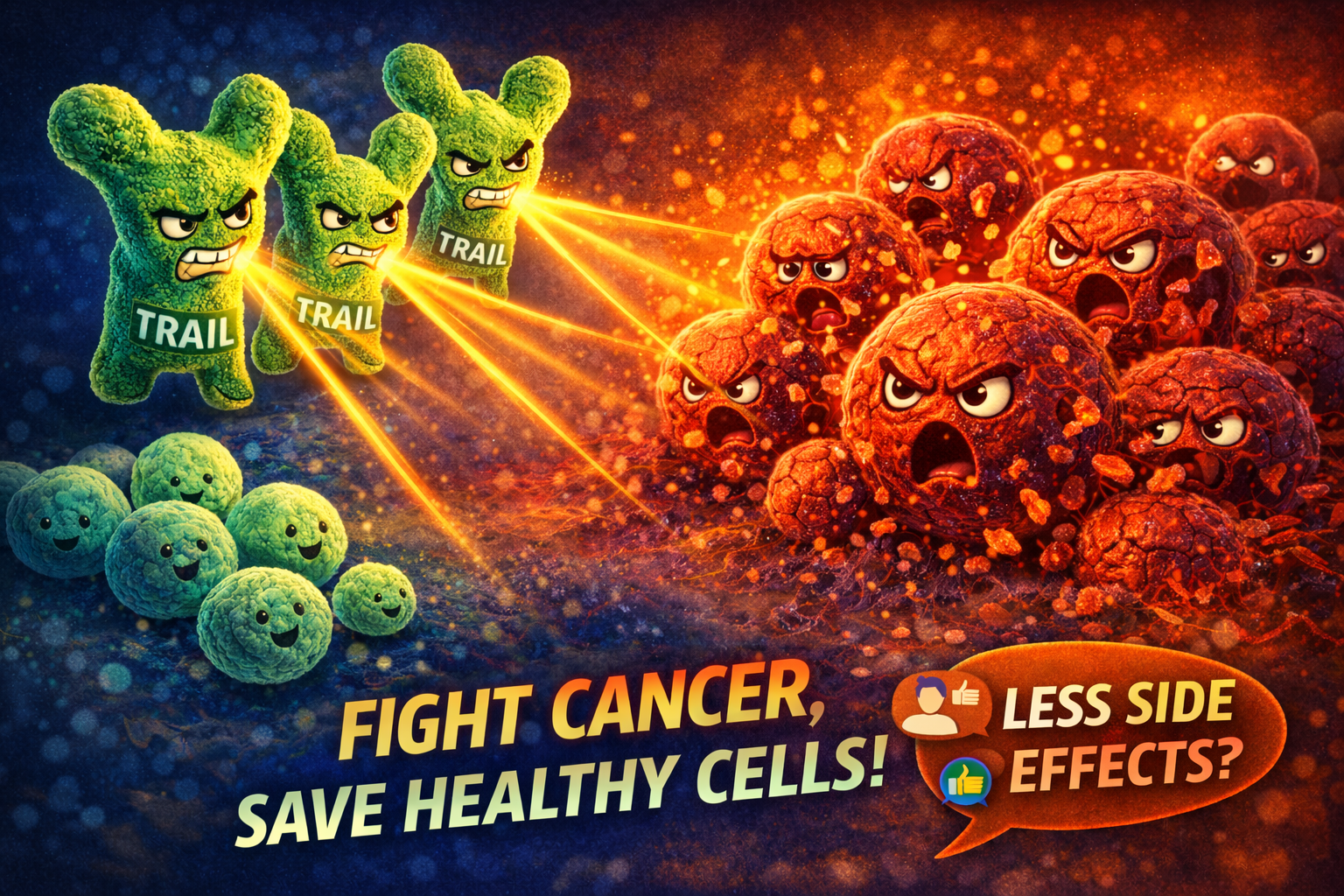
What if cancer treatment could tap into a natural safety system already built into our cells? Researchers are studying a protein called TRAIL (Tumor Necrosis Factor-Related Apoptosis-Inducing Ligand) as a possible future therapy. TRAIL works by triggering apoptosis; the body s built-in process that tells damaged or unnecessary cells when it s time to self-destruct safely.
What makes TRAIL especially exciting is what scientists have seen in laboratory and animal studies: it appears to target cancer cells more than healthy cells. That selectivity raises hope for treatments that could be more precise and potentially cause fewer side effects than traditional chemotherapy.
However, there s an important challenge. Not all cancers respond to TRAIL. Some tumor cells develop resistance, meaning they can ignore or block the death signal. To address this, researchers are exploring ways to strengthen TRAIL s effect, such as combining it with other approaches like niacin, specially designed inhibitors, radiation, or chemotherapy.
TRAIL-based therapies are still in the research phase and are not yet part of standard cancer treatment. Even so, this work reflects a major goal in modern oncology: developing smarter, more targeted therapies that destroy cancer cells while protecting healthy tissue.
Links:
Main article- https://pmc.ncbi.nlm.nih.gov/articles/PMC2976473/
Supporting article- https://www.nature.com/articles/s41418-022-01059-z
 Top
Top