

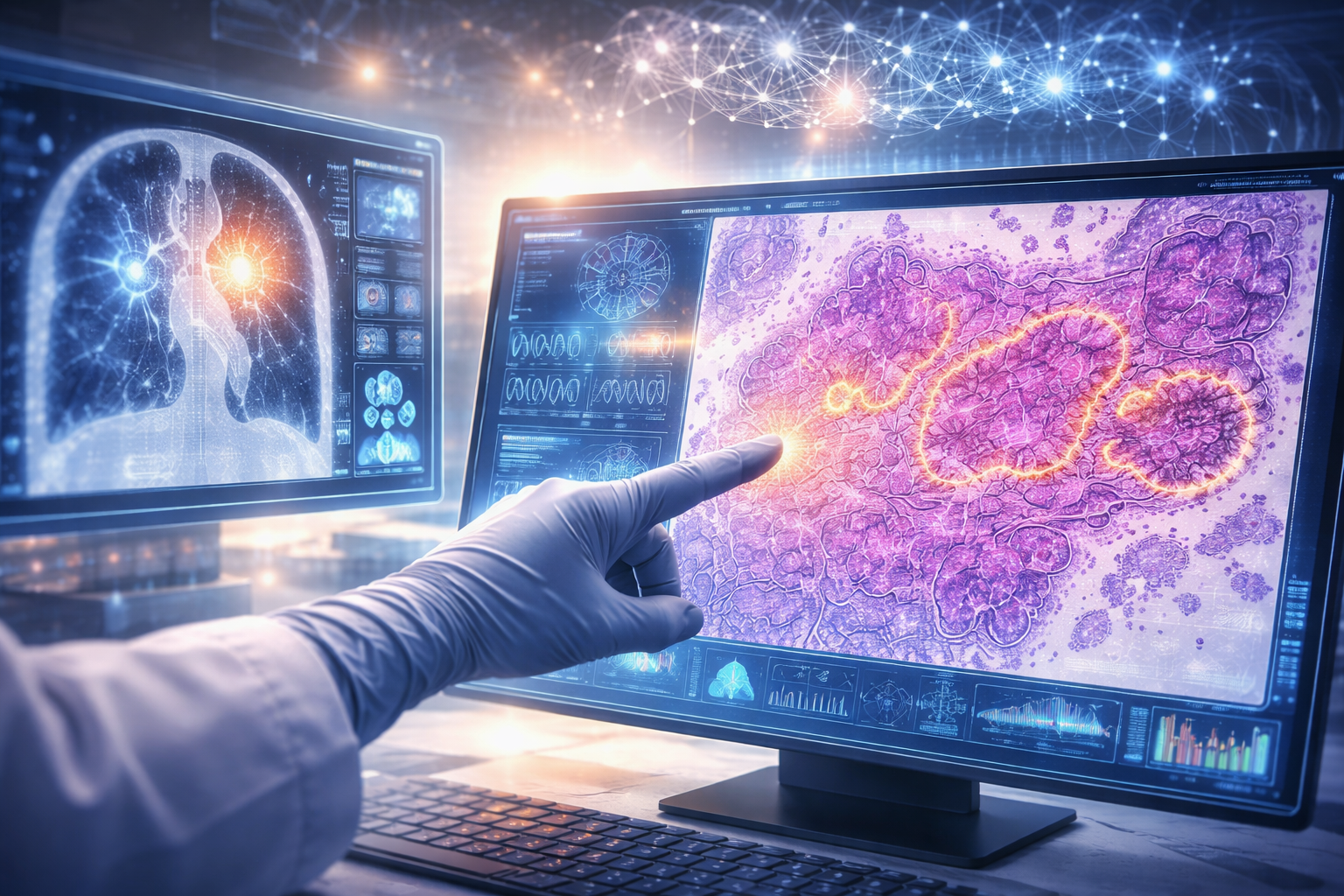
Artificial intelligence (AI) is rapidly reshaping how cancer is detected and diagnosed, offering powerful tools that may enhance both accuracy and consistency in patient care. A recent review published in Cancer Research highlights how AI is being applied across radiology and pathology, helping clinicians analyze medical images in more reproducible and explainable ways.
Traditionally, interpreting imaging and tissue samples can involve some variability between experts. AI is helping reduce this by using advanced techniques such as image classification, segmentation, and self-supervised learning to identify tumors more precisely and consistently. These tools can assist in detecting subtle patterns that may be difficult for the human eye to recognize.
One of the most promising developments is the rise of multimodal AI approaches, which combine data from imaging, pathology, and even genomic information. By integrating multiple sources of data, AI systems may provide a more comprehensive understanding of a patient s cancer, potentially supporting more personalized treatment decisions.
Despite these advances, challenges remain. Ensuring that AI systems are transparent, reliable, and clinically validated is critical before widespread adoption in healthcare settings. However, as research continues, AI has the potential to become a valuable partner in cancer diagnosis, helping clinicians make more informed decisions and improving outcomes for patients.
Author: Jakub Rzempoluch
 Top
Top