

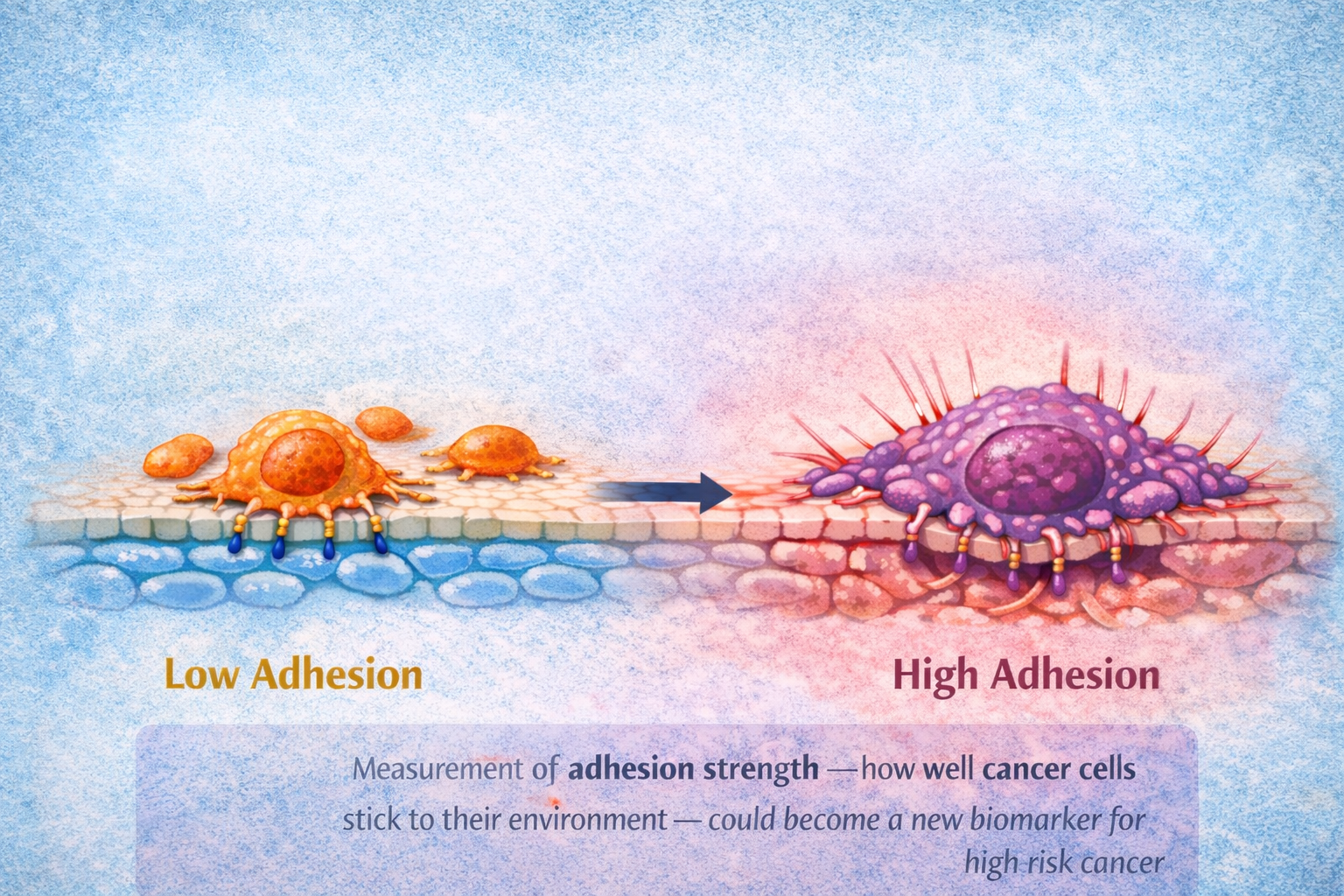
Scientists are discovering that cancer cells’ physical behavior, not just their genes, may reveal how dangerous a tumor could be. A recent study published in Cell Reports suggests that the strength with which cancer cells stick to their surroundings may help predict whether a tumor is likely to spread.
Researchers examined a property called adhesion strength, which describes how firmly cancer cells attach to nearby surfaces. Because metastasis (the spread of cancer to other parts of the body) causes the majority of cancer-related deaths, finding better ways to identify aggressive tumors is a major goal in cancer research.
In laboratory models of breast cancer, scientists found that cells with stronger adhesion were more likely to invade surrounding tissues and form metastatic tumors in animals. This finding suggests that measuring how “sticky” cancer cells are could potentially serve as a new biomarker for identifying high-risk cancers.
Unlike many current cancer biomarkers that focus on genetic mutations, adhesion strength reflects a biophysical property related to how cancer cells physically interact with their environment. This offers researchers a different way to understand tumor behavior.
Although more research is needed before this approach could be used in hospitals, the study highlights a promising new direction: using the physical properties of cancer cells to help predict disease progression and guide treatment decisions.
Authored by: Jakub Rzempoluch
 Top
Top