

Report by: Fatima K. Rehman, Ph.D
Over the past few years, our understanding and ability to monitor the global cancer burden has continued to evolve, and the latest data reveal both progress and growing challenges. In 2020, cancer already represented a major global health concern, with an estimated 19.3 million new cases and nearly 10 million deaths worldwide. Breast cancer had emerged as the most commonly diagnosed cancer, surpassing lung cancer. However, lung cancer remained the leading cause of cancer-related death.
What’s Changing?
In the most recent report lung cancer re-emerged as the most commonly diagnosed cancer globally, accounting for roughly 1 in 8 new cases. This could be partly due to rising pollution, deteriorating air quality and increase in people using tobacco, smoking and vaping. Lung cancer continues to be the leading cause of cancer death, followed by colorectal, liver, breast, and stomach cancers. These patterns that have remained relatively consistent over time.
A Growing Global Burden
Perhaps the most concerning trend is the projected rise in cancer cases. In 2020, researchers estimated that global cancer incidence could increase by nearly 47% by 2040, driven largely by population growth, aging, and changes in lifestyle and environmental exposures. Just 5 years later, researchers now estimate close to 20 million new cancer cases and 9.7 million deaths annually, reinforcing that cancer remains one of the leading causes of death worldwide. More recent projections suggest the situation may be even more urgent, with new cancer cases expected to reach approximately 35 million per year by 2050. This increase is expected to disproportionately affect low- and middle-income countries, where access to early detection, prevention, and treatment remains limited.
Inequality in Cancer Outcomes
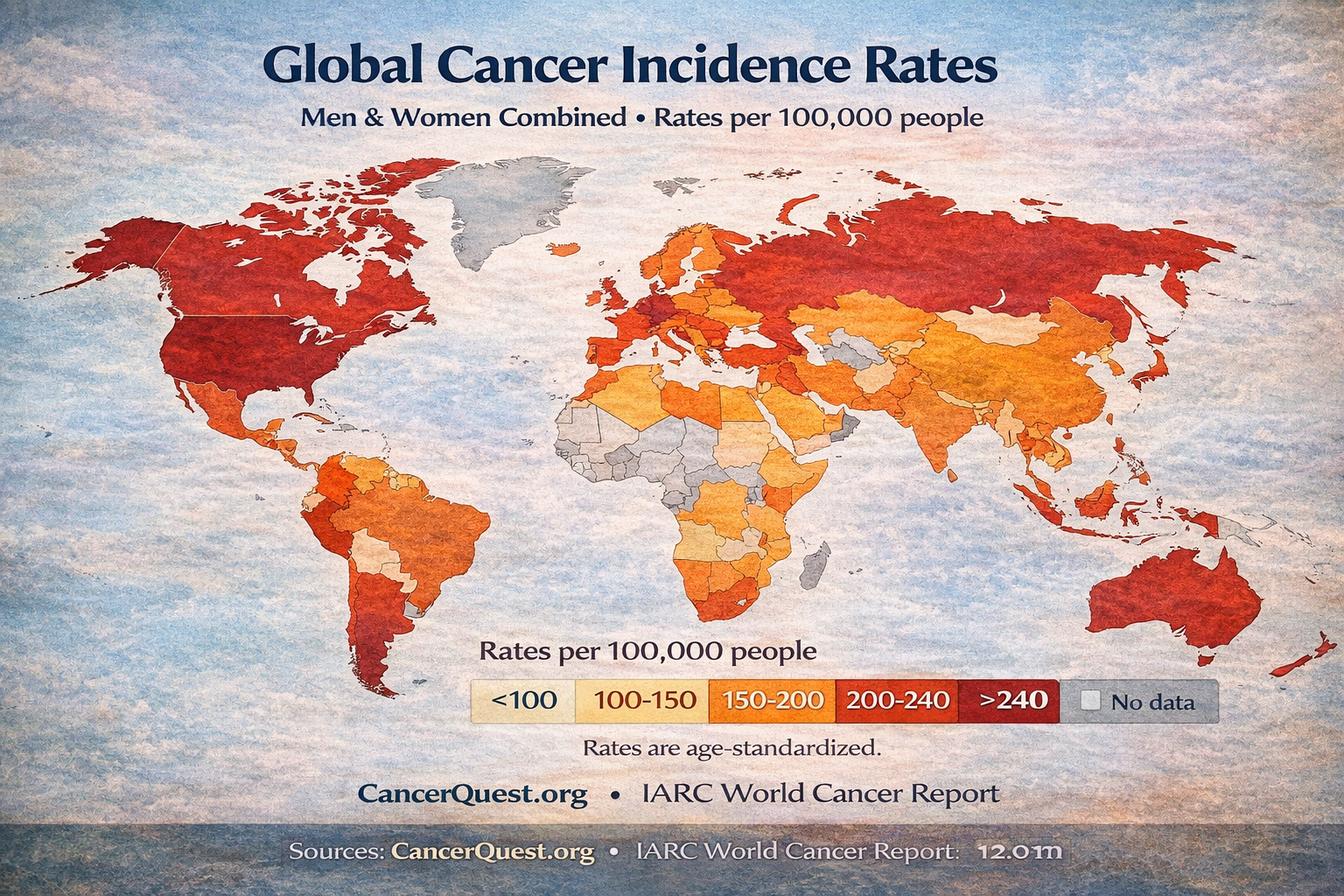
While cancer incidence tends to be higher in more developed regions, mortality rates remain high globally, particularly in areas with fewer healthcare resources. This highlights a critical gap, not just in cancer biology, but in access to care, early detection, and education.
What Does This Mean Moving Forward?
Despite rising numbers, there is also reason for hope.
Many cancers are linked to modifiable risk factors, including smoking, obesity, diet, exercise, infections, and environmental exposures. Addressing these factors through prevention strategies could significantly reduce future cancer burden. Advances in early detection, targeted therapies, and immunotherapy also continue to improve outcomes for many patients. In many cases, even high-grade and metastatic cancers can be treated as a chronic illness and can be managed for many years with a reasonable quality of life.
The Big Picture
Cancer is not just increasing, it is evolving.
Understanding these trends helps guide:
-Prevention efforts
-Screening strategies
-Resource allocation
-Future research priorities
As global numbers rise, one message becomes clear:
Early detection, equitable access to care, and public health education will be critical in shaping the future of cancer outcomes worldwide.
Sources:
https://acsjournals.onlinelibrary.wiley.com/doi/10.3322/caac.21660
https://pubmed.ncbi.nlm.nih.gov/41528114/
 Top
Top