

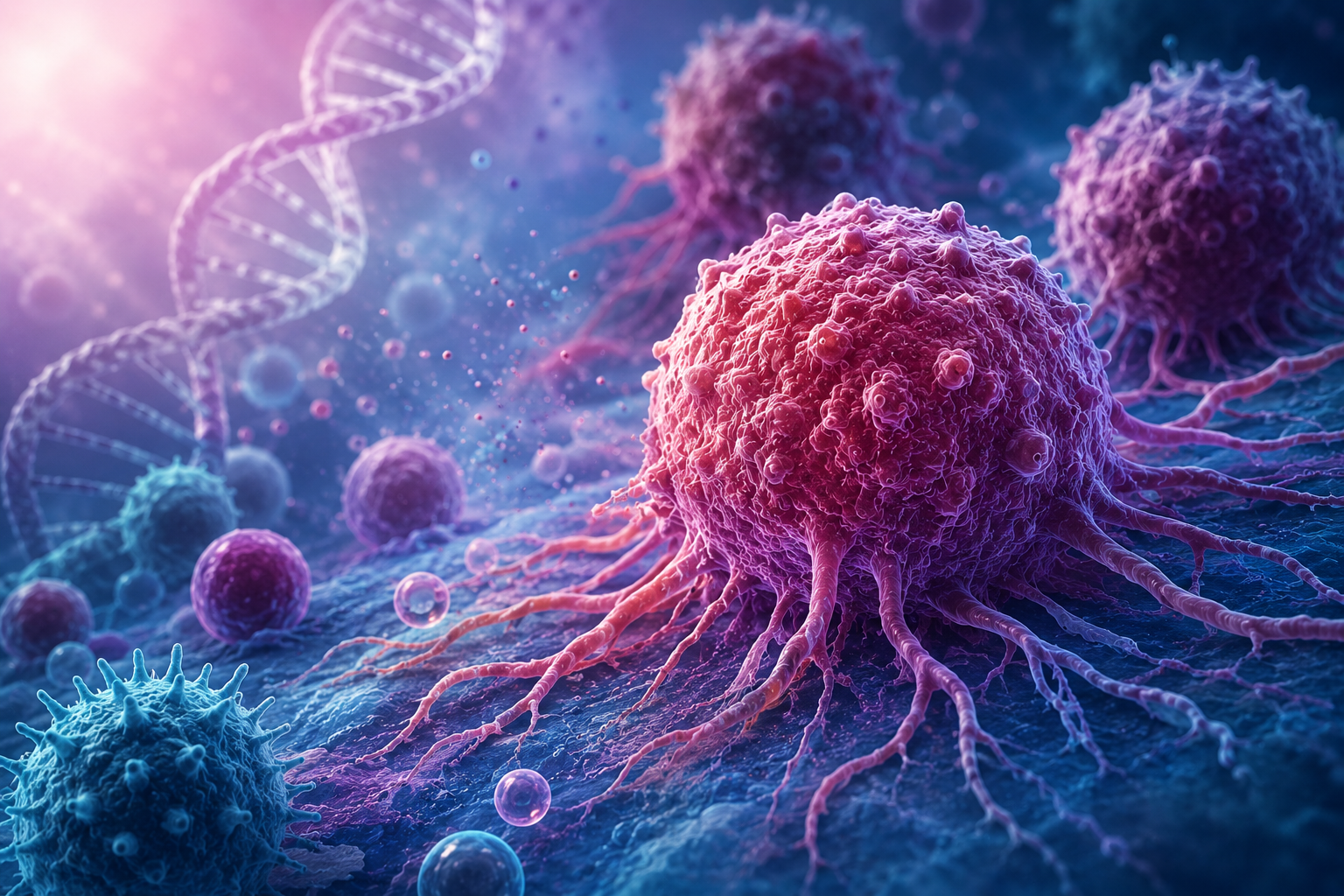
Cancer treatment has advanced dramatically in recent years, yet one major challenge continues to limit long-term success: treatment resistance. Even when therapies initially work well, some cancer cells can adapt, survive, and eventually return stronger than before. A recent study published in Nature Cancer highlights how researchers are continuing to uncover the biological mechanisms that allow tumors to evolve and resist therapy. These discoveries are helping scientists better understand the complex relationship between cancer cells, their surrounding environment, and the selective pressures created by treatment itself.
Why Resistance Happens
Cancer is not made up of identical cells. Tumors contain diverse populations of cells with different mutations, behaviors, and survival strategies. When therapy is introduced, sensitive cells may die while resistant cells survive and expand. Researchers are increasingly finding that resistance can involve:
* Genetic mutations that alter drug targets
* Changes in cellular metabolism
* Interactions with the tumor microenvironment
* Epigenetic reprogramming that helps cancer cells adapt under stress
These adaptive changes can make cancers harder to eliminate completely.
The Growing Role of Precision Medicine
Understanding the biology behind resistance is helping move cancer care toward more personalized approaches. Rather than treating tumors as static diseases, researchers now view cancer as a dynamic system that evolves over time.
New technologies, including single-cell sequencing, multiomic analysis, spatial biology approaches and AI-assisted data interpretation are allowing scientists to examine tumors in much greater detail and identify resistant cell populations earlier. This may eventually help clinicians predict which patients are most likely to respond to therapy, detect relapse earlier and help design combination treatments that prevent resistant cells from taking over.
Why This Matters
Treatment resistance is one of the main reasons advanced cancers become difficult to cure. By understanding how cancer cells adapt and survive, researchers hope to develop therapies that are more durable, targeted and less likely to fail over time. This growing area of research represents an important step toward smarter and more individualized cancer treatment strategies.
Looking Ahead
Although many questions remain, advances in cancer biology are rapidly reshaping how scientists think about therapy response and disease progression. Rather than focusing only on destroying tumors, researchers are increasingly studying how to prevent cancer cells from adapting in the first place. The future of cancer treatment may depend not only on attacking cancer, but on understanding how cancer changes, survives, and evolves.
 Top
Top