

By CancerQuest interns
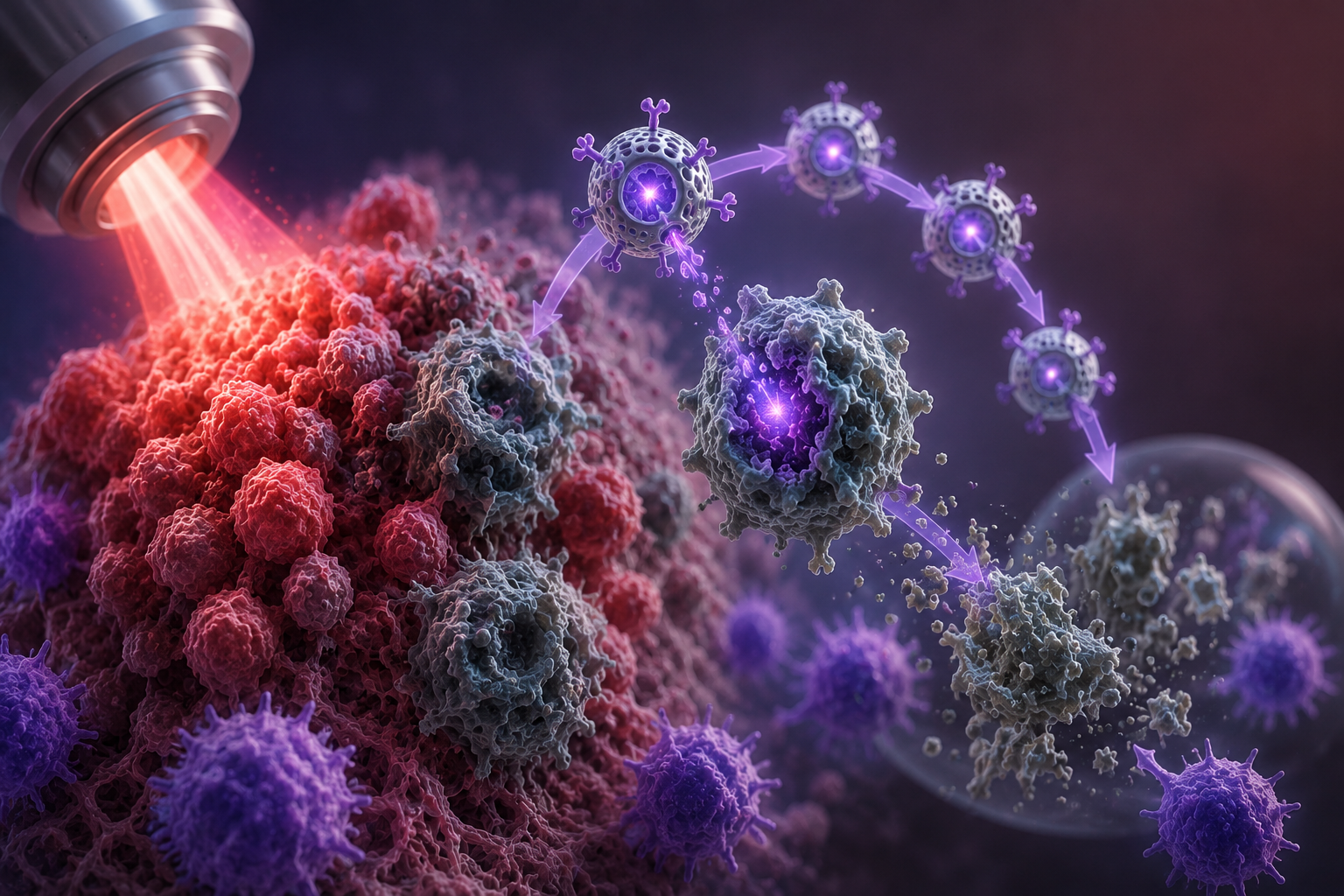
Radiation therapy is a common treatment for cancer, but it doesn’t always fully eliminate tumor cells. A recent study in Nature Communications (2026) shows that some cancer cells survive radiation by entering a special state called cellular senescence. These are often called “zombie cells” because they are no longer dividing, but they are still alive and active.
What are “zombie” cancer cells?
After radiation treatment, some tumor cells stop growing permanently (they enter senescence). These cells don’t die right away and instead, they stay in the tumor and continue releasing signals. These senescent cells can promote inflammation, help nearby cancer cells survive and add to tumor relapse and treatment resistance. So even though radiation kills many cancer cells, these “leftover” cells can still cause problems later.
Targeting “Zombie” cells:
The researchers created a special treatment called a senolytic nanoplatform that use tiny nanoparticles that were engineered to find and remove senescent (“zombie”) cancer cells. These nanoparticles were designed to move through the body safely and accumulate in the tumor. Once there, they activate only in the tumor environment and trigger removal of senescent cells. This can be especially useful when combined with radiation therapy. It can help reduce the number of senescent tumor cells, slow tumor regrowth in experimental models and reduce therapy resistance. These type of therapies allow scientists to not only target active cancer cells but also help clean up surviving cells that keep the tumor environment unhealthy.
 Top
Top