

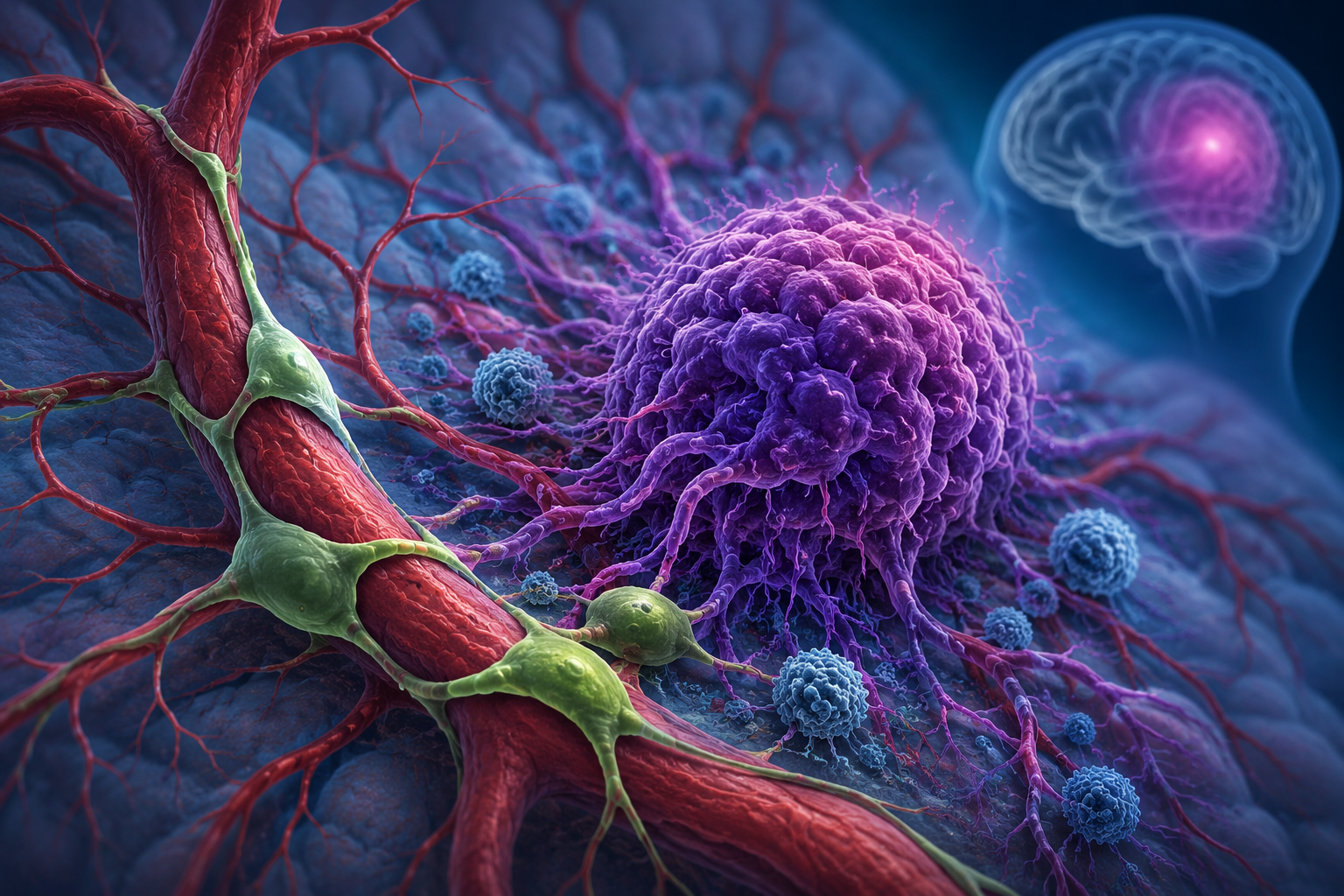
Glioblastoma (GBM) is a deadly form of brain cancer. Despite surgery, radiation, and chemotherapy, the cancer often returns, leaving patients with limited treatment options. While most research has focused on targeting cancer cells directly, a new study published in Nature Communications reveals that a group of cells surrounding blood vessels called pericytes may play a critical role in slowing tumor progression rather than promoting it.
What Are Pericytes?
Pericytes are support cells that wrap around small blood vessels in the brain. Under normal conditions, they help:
-Maintain the blood-brain barrier.
-Keep blood vessels healthy and stable
-Keep communication going between blood vessels and surrounding tissue.
Researchers discovered that these cells can also be an important communication hub within glioblastoma tumors, influencing both cancer cells and immune cells in the tumor microenvironment.
Key Findings
The study found that removing or reducing pericytes leads to harmful changes that includes faster tumor growth and very shorter survival in mouse models. In addition, it also leads to abnormal blood vessels that weaken the blood-brain barrier, greater tumor invasion and an increase in immunosuppressive macrophages. These effects are a result of activation of the HGF-MET signaling pathway, which promotes aggressive tumor behavior.
Why Is This Important?
Researchers identified a highly aggressive subgroup of glioblastoma cells that became more common when pericytes were absent. These cells displayed a mesenchymal cell state associated with aggressive cancers. These were more capable of invading healthy brain tissue and showed increased activation of genes linked to tumor migration and invasion that were associated with worse patient outcomes.
Looking Ahead
While this research is still in the early stages and has only been tested in laboratory and animal models, the findings still give new direction for glioblastoma research. Instead of focusing solely on destroying cancer cells, future works may also aim to preserve or improve the protective functions of pericytes. Clinical trials will be needed to determine whether these discoveries can be used for safe and effective treatments for patients with glioblastoma.
 Top
Top