

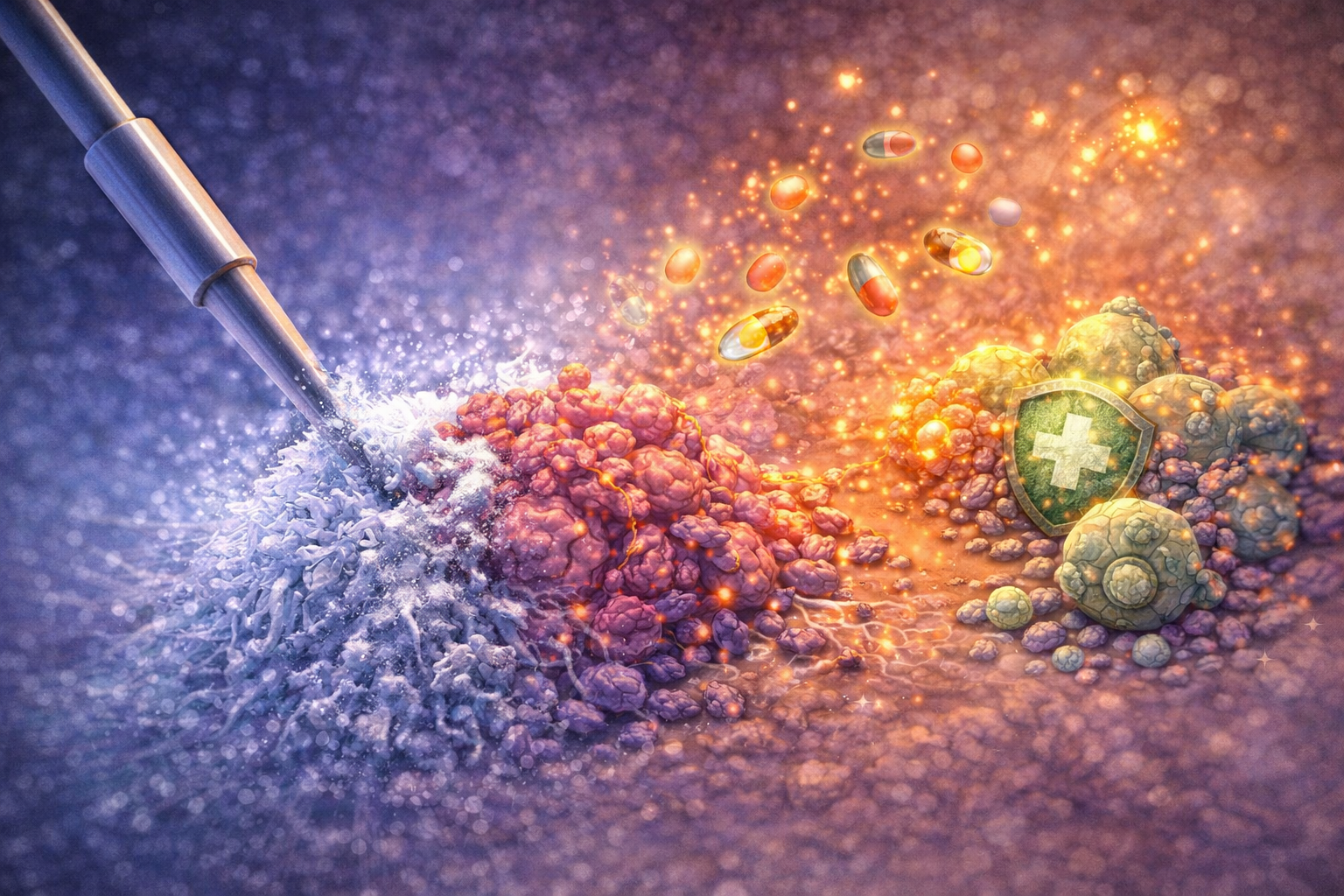
Cryoablation, a treatment that uses extreme cold to destroy cancer cells, is emerging as an increasingly precise option for managing certain tumors. By inserting a thin probe directly into a tumor and rapidly freezing it, clinicians can target cancer while minimizing damage to surrounding healthy tissue. This approach is already used in the treatment of several solid tumors, including those of the liver, kidney, prostate, and breast.
Recent research is now exploring how nanotechnology can enhance the effectiveness of cryoablation. Scientists are developing tiny nanoparticles that can improve imaging, allowing doctors to better visualize tumors during treatment, and even deliver therapeutic agents directly to cancer cells. Some nanoparticles may also help stimulate the immune system, potentially turning the destroyed tumor into a signal that encourages the body to recognize and attack remaining cancer cells.
Combining cryoablation with nanoparticles or immunotherapy could offer several advantages, including more precise tumor targeting, fewer side effects, and improved overall treatment outcomes. While much of this work is still under investigation, these advances highlight a growing trend in cancer care: integrating innovative technologies to make treatments more targeted, effective, and patient-friendly.
As research continues, cryoablation, enhanced by nanotechnology, may play an increasingly important role in the future of cancer therapy.
 Top
Top