

By Fatima Rehman
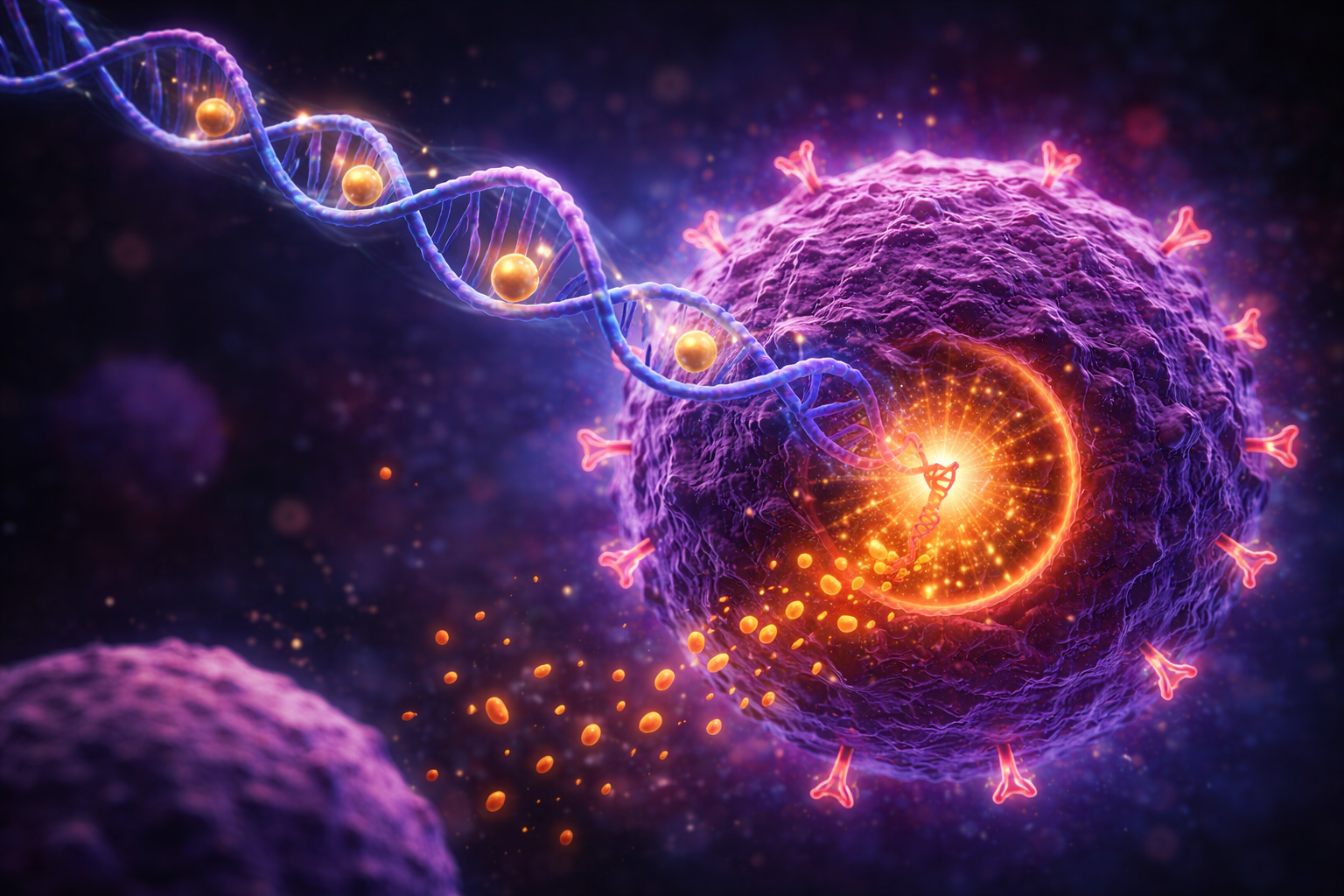
Recent advances in biotechnology are opening new possibilities for how cancer can be treated, moving beyond traditional approaches toward therapies that are increasingly precise, programmable, and responsive to the biology of individual tumors. A study by Chen et al. (2026), published in Nature Biotechnology, introduces an innovative strategy using DNA–drug conjugates that function as logic-controlled delivery systems. These molecular constructs are designed to activate therapeutic agents only when specific biological signals, unique to cancer cells, are present.
How It Works
Unlike conventional treatments that can affect both healthy and cancerous tissue, this approach leverages principles from molecular engineering:
* Logic-gated activation:
The drug remains inactive unless defined cancer-associated markers are detected, functioning similarly to a biological “if–then” circuit.
* Hybridization chain reaction (HCR):
Once triggered, the system amplifies the signal through DNA-based chain reactions, enhancing the therapeutic effect within the tumor environment.
* Targeted precision:
By restricting activation to cancer-specific conditions, this strategy aims to minimize damage to surrounding healthy cells.
Why This Matters
Current cancer therapies often face a central challenge: balancing effectiveness with toxicity. Treatments such as chemotherapy can be powerful but may also impact healthy tissues, leading to significant side effects.
The DNA–drug conjugate system represents a shift toward:
* Improved specificity
* Reduced systemic toxicity
* Greater control over when and where drugs act
This level of control could be particularly valuable for tumors that are difficult to treat or for patients who experience significant side effects from existing therapies.
Looking Ahead
While this technology is still in the experimental stage, it reflects a broader movement toward intelligent, programmable medicine, where treatments are not only targeted, but also capable of responding dynamically to the biological environment.
Future research will determine how these systems perform in clinical settings, how they can be scaled, and how they might integrate with existing therapies such as immunotherapy.
The Takeaway
Cancer treatment is evolving from broadly acting therapies to highly precise, condition-dependent interventions. DNA–drug conjugates highlight a future where treatments can be engineered to act only where they are needed, bringing us closer to safer and more effective cancer care.
Reference:
Si-Kai Chen, Miguel López-Tena, Francesco Russo, Emma E. Watson, Millicent Dockerill, Javier Cabello Garcia, Sofia Barluenga, Nicolas Winssinger. DNA–drug conjugates enable logic-gated drug delivery amplified by hybridization chain reactions. Nature Biotechnology, 2026; DOI: 10.1038/s41587-026-03044-0
 Top
Top