

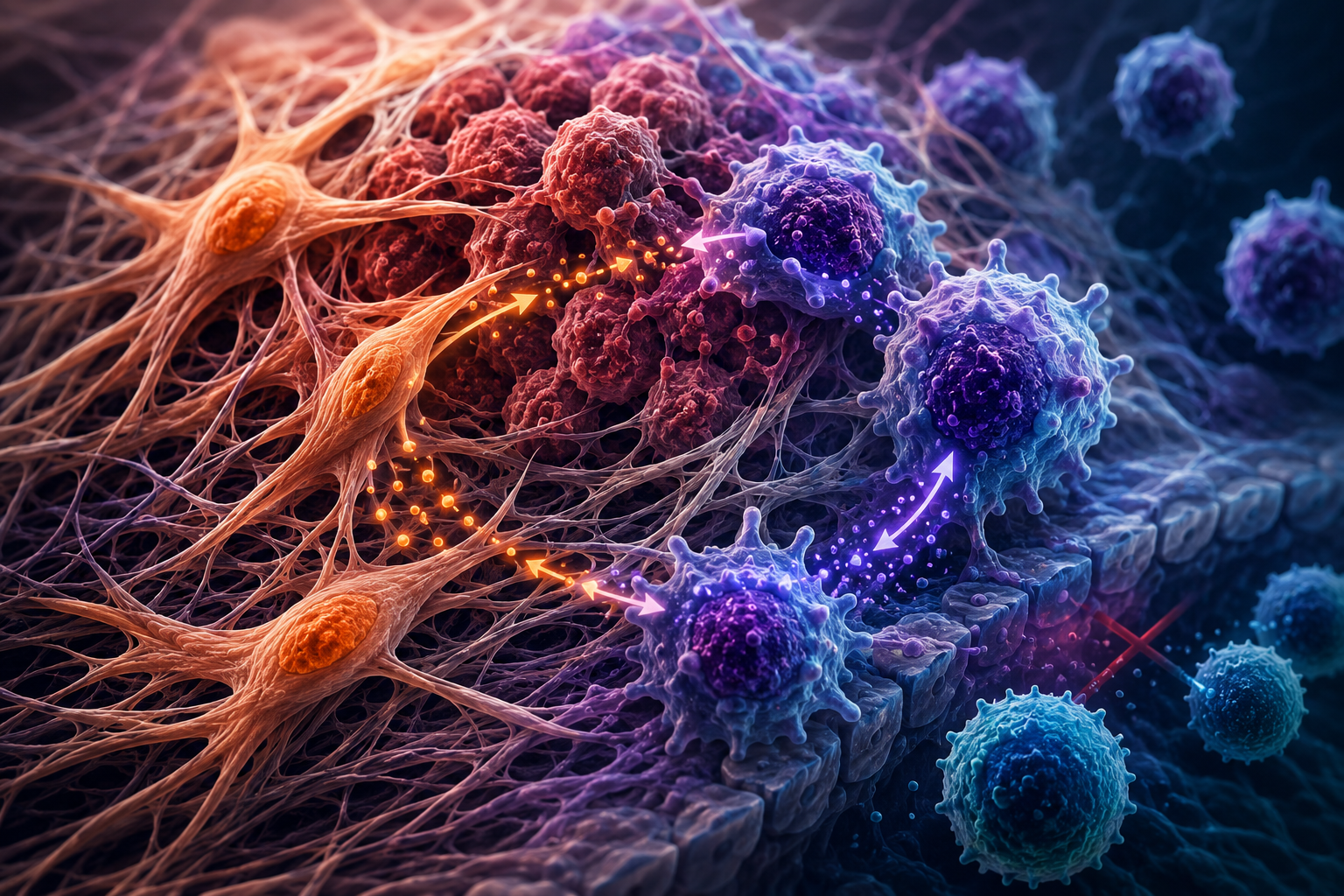
Cancer doesn’t operate alone. Inside the body, tumors develop their own surrounding environment called the tumor microenvironment (TME) a mix of cells, signals, and structural changes that can either fight the tumor or, in some cases, help it survive. Instead of being isolated, cancer cells actively interact with nearby cells to shape this environment in their favor. Two of the most important players in this system are cancer-associated fibroblasts (CAFs) and tumor-associated macrophages (TAMs). Fibroblasts normally help repair damaged tissue, while macrophages protect the body from infections. But within tumors, both can be reprogrammed in ways that shift them from defenders of the body to supporters of cancer growth and treatment resistance.
The Cellular Partnership
Inside the tumor, CAFs and TAMs form a constant communication loop that strengthens cancer’s defenses:
* CAFs release chemical signals that recruit and activate macrophages
* TAMs respond by releasing growth factors that further stimulate fibroblasts
* This back-and-forth creates a feedback loop that makes the tumor growth
* Together, they can suppress immune system activity around the tumor
* This interaction essentially turns a normal repair-and-defense system into one that increases cancer progression
The Shield
CAFs and TAMs don’t just communicate instead they physically and chemically protect the tumor.
* CAFs remodel surrounding tissue, by creating a structural barrier
* TAMs weaken immune responses, by suppressing T cells
* Immune cells struggle to enter and attack the tumor
* The environment can reduce the effectiveness of treatments like immunotherapy
The result is a tumor that becomes harder for both the immune system and medicine to reach.
Why This Matters
Understanding this support system could open new doors for future cancer therapies, since targeting not only the cancer cells but also the cells that support them could make treatments more effective. Blocking communication between CAFs and TAMs may weaken the tumor’s defenses At the same time, preventing CAFs from forming dense protective shield around tumors could improve how well drugs reach and affect cancer cells.
 Top
Top