

From CancerQuest news
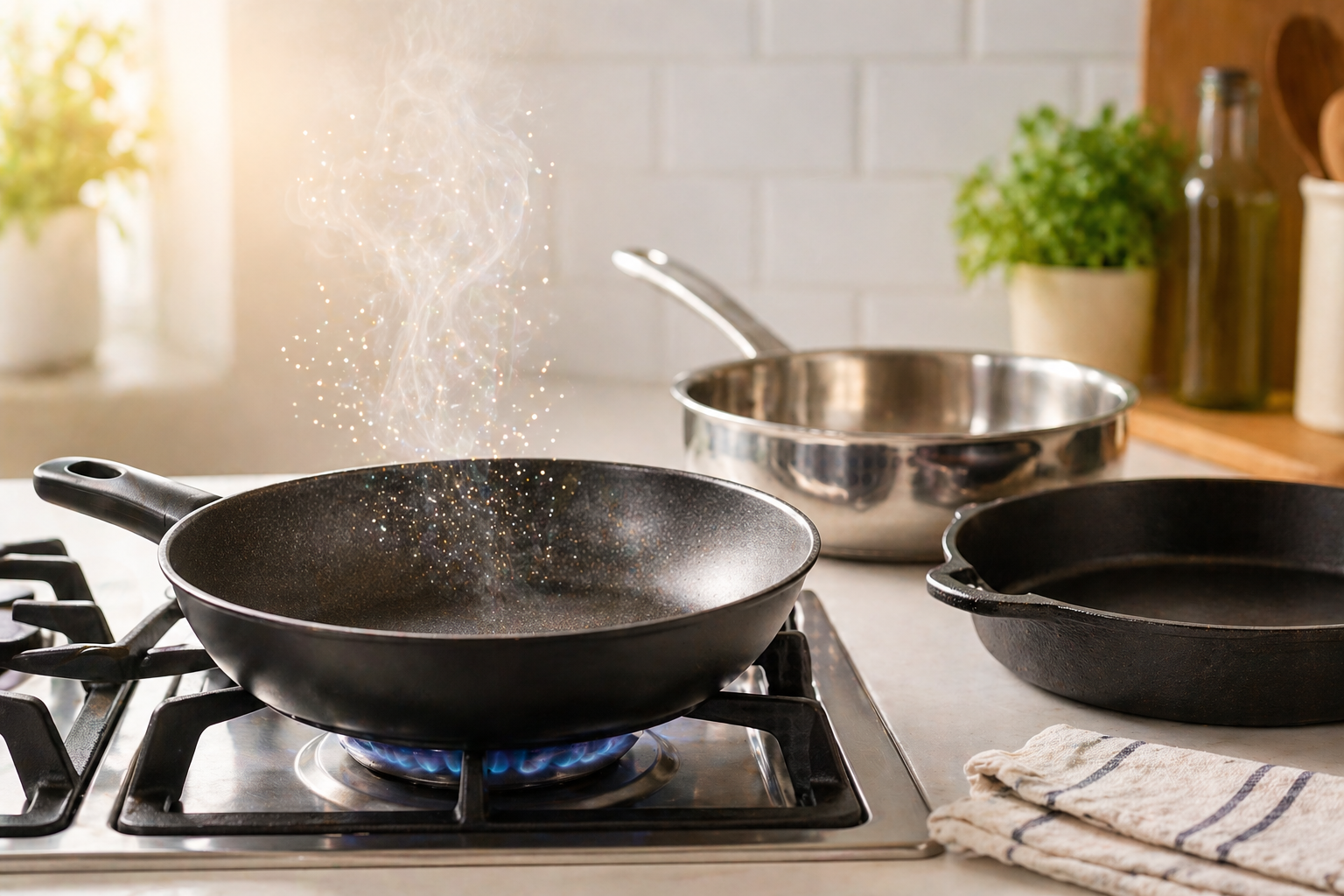
Nonstick cookware is a staple in many kitchens, valued for its convenience and ease of use. However, as research continues to explore how these materials behave under heat, questions have emerged about their long-term safety. Most nonstick pans are coated with polytetrafluoroethylene (PTFE), a synthetic material designed to prevent food from sticking. When used properly, PTFE-coated cookware is generally considered safe. But under certain conditions; particularly high heat or surface damage; the coating can begin to degrade.
What Happens When Nonstick Pans Overheat?
At elevated temperatures, PTFE coatings may release small amounts of chemical byproducts into the air and potentially into food. These substances are often associated with a broader group of compounds known as PFAS (per- and polyfluoroalkyl substances).
PFAS are sometimes referred to as “forever chemicals” because they:
* Persist in the environment and the body
* Break down very slowly over time
* Can accumulate with repeated exposure
Some studies have linked PFAS exposure to:
* Hormonal disruption
* Immune system effects
* Increased risk of certain cancers
It is important to note that much of this research focuses on chronic exposure over time, and the exact risks associated with everyday cookware use are still being studied.
When Does Risk Increase?
Certain conditions may increase the likelihood of chemical release:
* Overheating pans (especially above recommended temperatures)
* Using cookware that is scratched, chipped, or worn
* Cooking at high heat without proper ventilation
These factors can accelerate the breakdown of nonstick coatings.
Practical Ways to Reduce Exposure
For those looking to minimize potential risks, experts suggest simple adjustments:
* Use low to medium heat settings when cooking
* Avoid preheating empty nonstick pans
* Replace cookware that shows visible wear or damage
* Incorporate alternatives such as:
o Stainless steel
o Cast iron
o Ceramic-coated cookware
These steps allow individuals to maintain convenience while reducing unnecessary exposure.
Looking Ahead
Research on PFAS and related compounds is ongoing, with scientists continuing to investigate how everyday exposures may contribute to long-term health outcomes. This growing area of study reflects a broader shift toward understanding how routine environmental factors influence health over time.
The Takeaway
Nonstick cookware remains safe when used as directed. However, awareness of how materials behave under heat, and how to use them properly, can help reduce potential risks.
In many cases, small, informed choices in everyday habits can make a meaningful difference.
 Top
Top